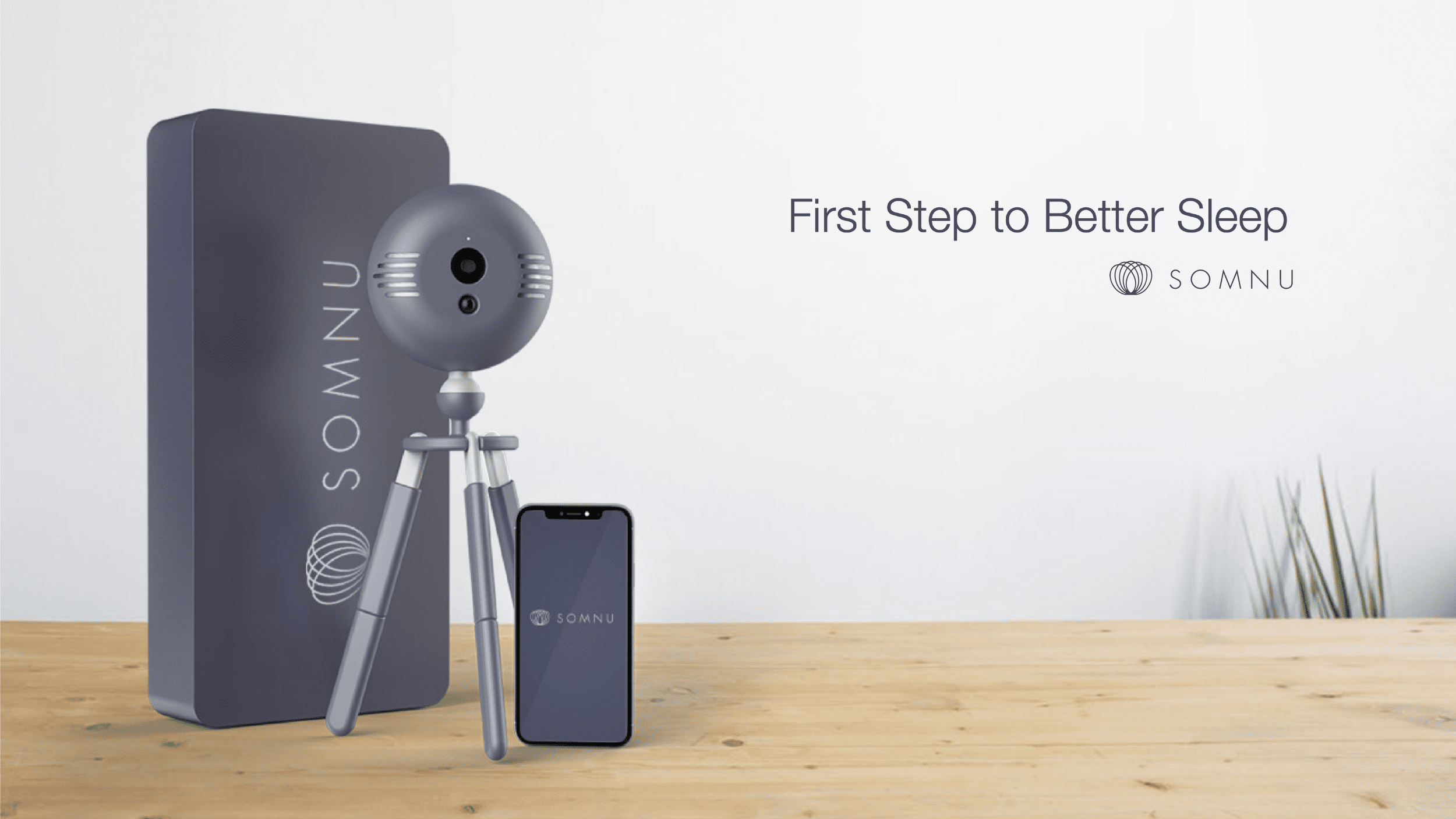
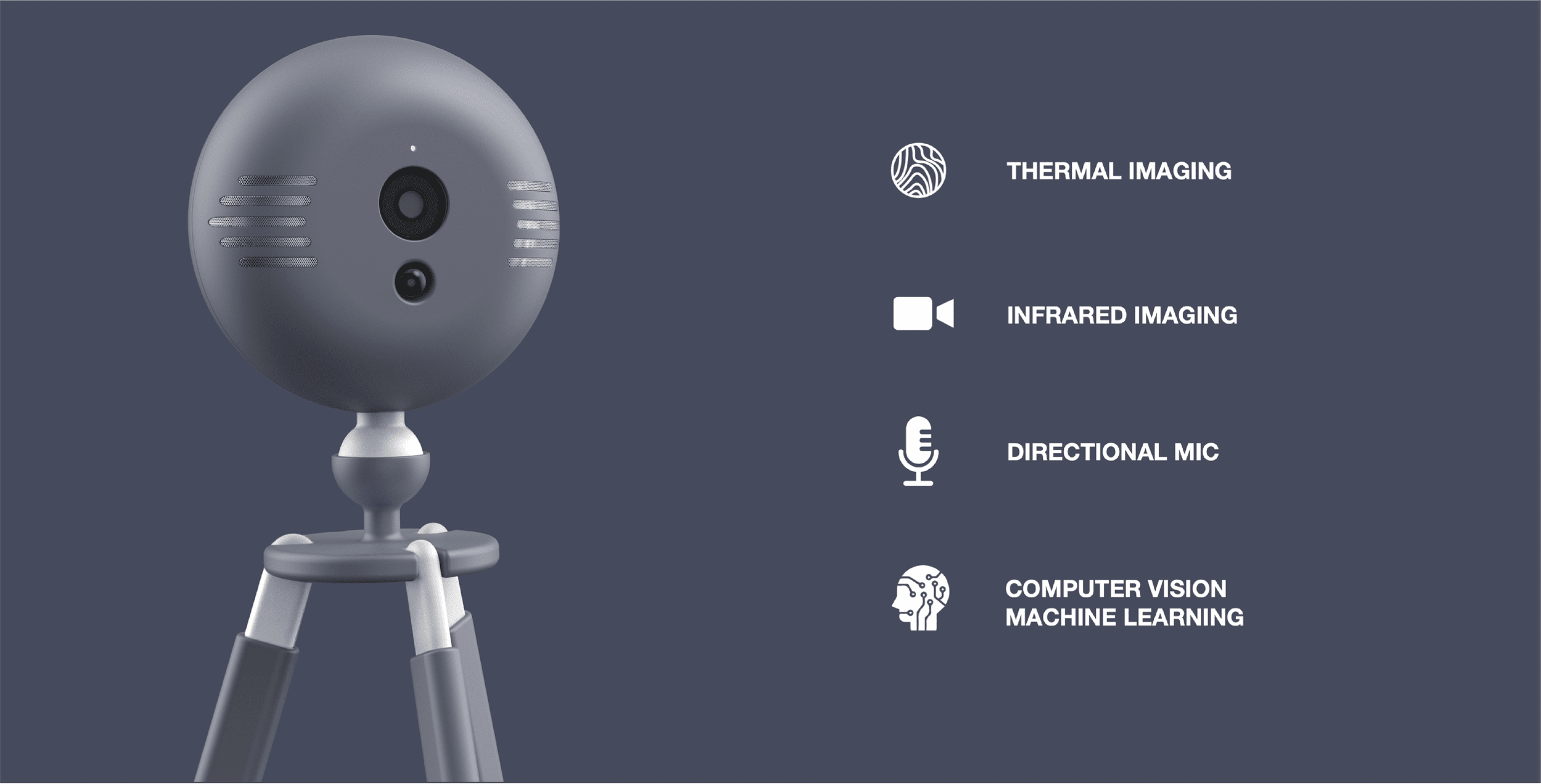
Somnu is a graduate-level service design project I developed at ArtCenter College of Design, focused on reimagining the at-home sleep study process used to diagnose Sleep Apnea.
RoleLead Service Designer
Project TypeGraduate Project, ArtCenter
ScopeFull Service Ecosystem
Scroll to explore
01
Overview
Somnu is a graduate-level service design project I developed at ArtCenter College of Design, during my Grad program, focused on reimagining the at-home sleep study process used to diagnose Sleep Apnea. The solution integrated hardware, a mobile app, and a doctor-facing platform to make sleep testing easier for patients, more actionable for physicians, and more efficient for healthcare providers.
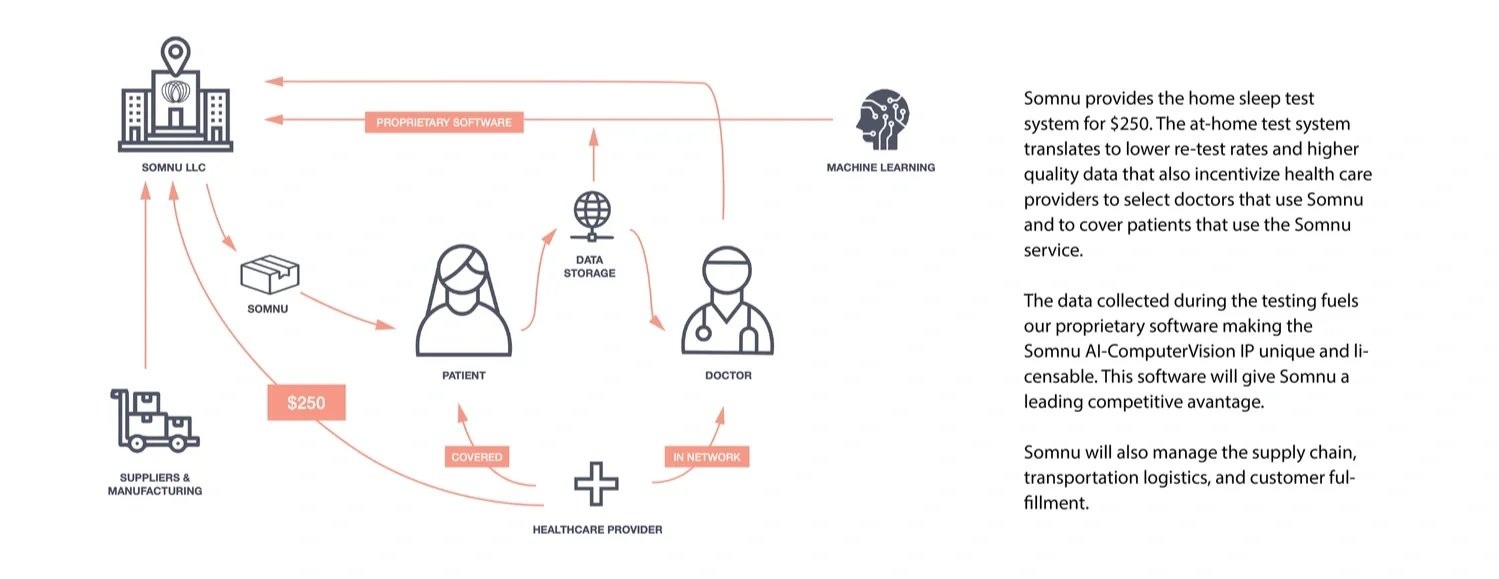
By approaching this as a service design challenge, I mapped the full journey across patients, doctors, logistics, and business systems. The result was a holistic ecosystem that reduced setup anxiety, improved data quality, and aligned with a viable business model.
Goals
Patient: Reduce setup anxiety and improve compliance by simplifying onboarding.
Doctor: Deliver structured insights instead of raw data to save review time and improve diagnostic confidence.
Business: Create a service model with lower re-test rates and a sustainable revenue stream.
Independent project within ArtCenter graduate program, with critique and guidance from faculty and peers.
02
The Challenge
How can we improve the sleep quality of Americans?
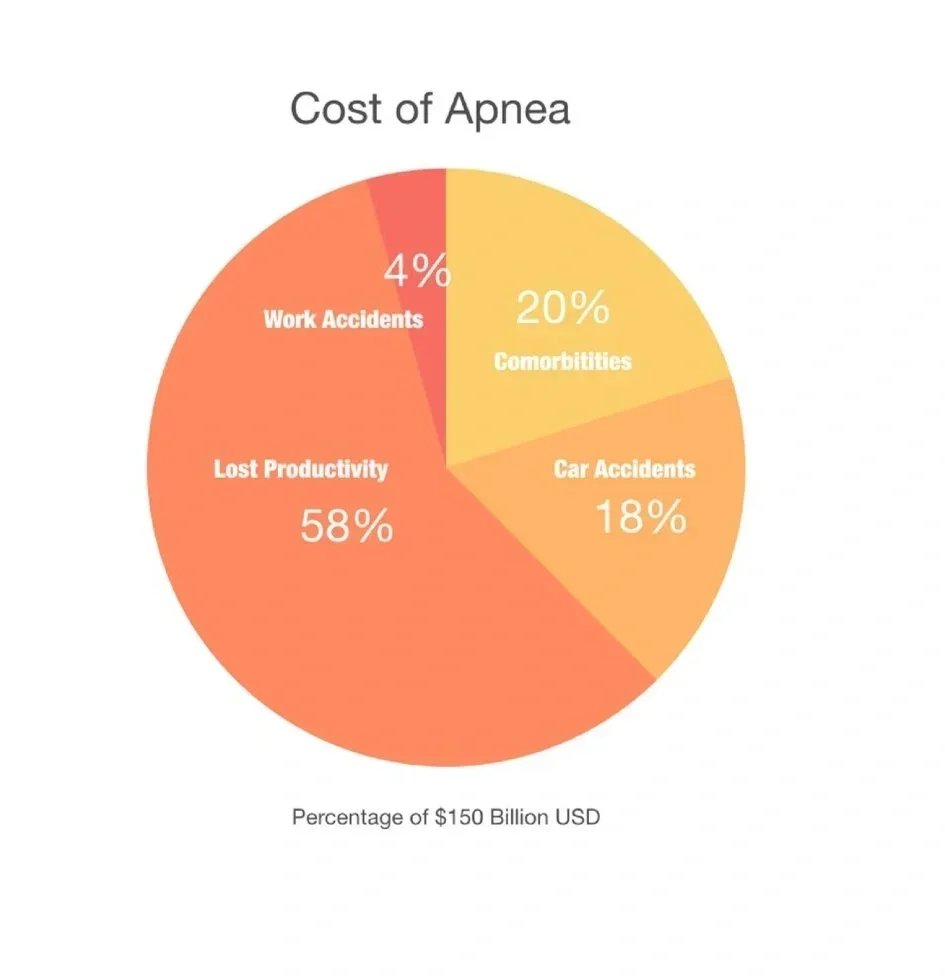
According to National Sleep Foundation, the leading medical cause of poor sleep is sleep apnea, a sleeping disorder in which sleeping repeatedly starts and stops. Untreated Obstructive sleep apnea is costing Americans about $150 Billion a year.
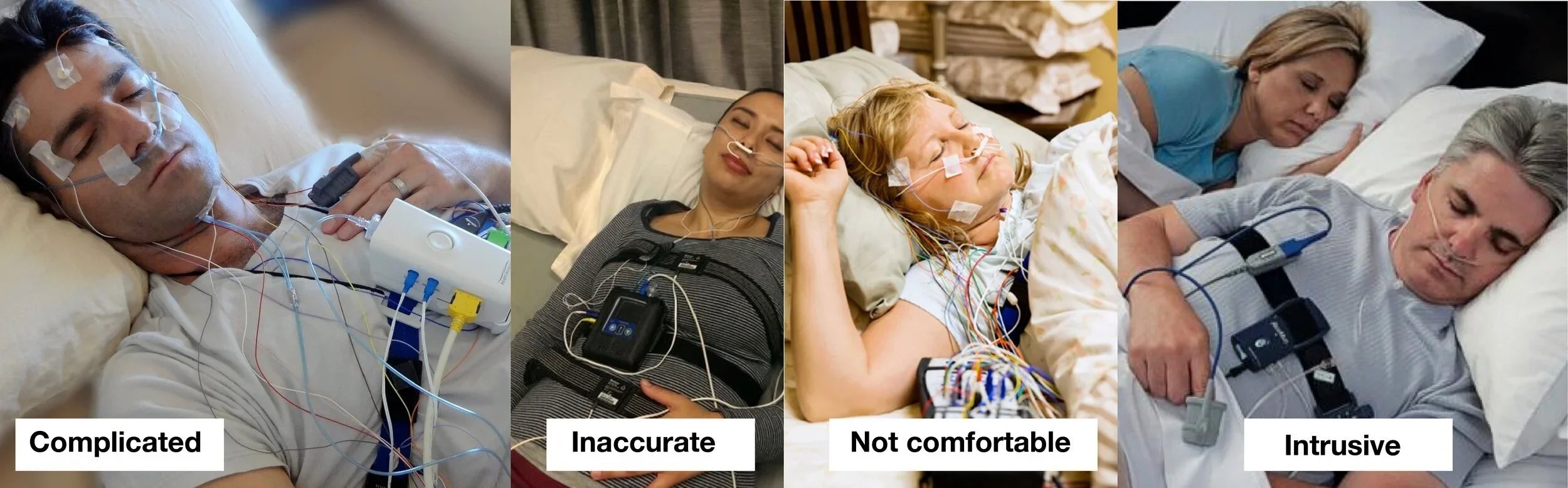
Sleep disorders are widely under-diagnosed due to friction in traditional sleep testing:
Expensive overnight clinic visits
Complex device setup at home
Fragmented communication between patients, doctors, and insurers
03
Speaking with Patients
Users struggled with setup and compliance, leading to inaccurate data or test abandonment.
User Research : Persona
WA
Waldon Adams
48 Yrs
Los Angeles, California Project Manager
Suffering from sleep apnea for the last 4 years, a very troublesome time for me and my wife. The sleep test costed us thousands of dollars and the CPAP machine was very expensive. We had to sleep in different rooms for months.
DM
Danny McGibney
54 Yrs
Arlington, Virginia Sr. IT Project Manager
The diagnoses for my sleep Apnea took some time, as we barely have any sleep specialists in Arlington. I had a very severe snoring problem, and I could feel the apnea was effecting my overall health. I had to get the test scheduled 1 and half months prior, and in the sleep lab, it was very uncomfortable. I wasn't sleeping in my normal position.
KD
Kathy Donaldson
55 Yrs
Punxsutawney, Pennsylvania Real Estate Agent
I got diagnosed with sleep apnea during my menopause. I had to do 2-3 sleep tests which were very expensive, before the doctor could diagnose me with sleep apnea. I still use the CPAP machine, but I often times remove it in the middle of the night, it is extremely uncomfortable.
How can we get the current population tested for apnea so that they can start getting a better night's sleep?
Patients struggled with setup and compliance - leading to inaccurate data or test abandonment.
Doctors needed trustworthy, structured data - but often spent hours piecing together raw outputs.
Healthcare providers sought lower re-test rates - since repeated tests increased costs and delayed treatment.
04
Service Design Approach & Solution
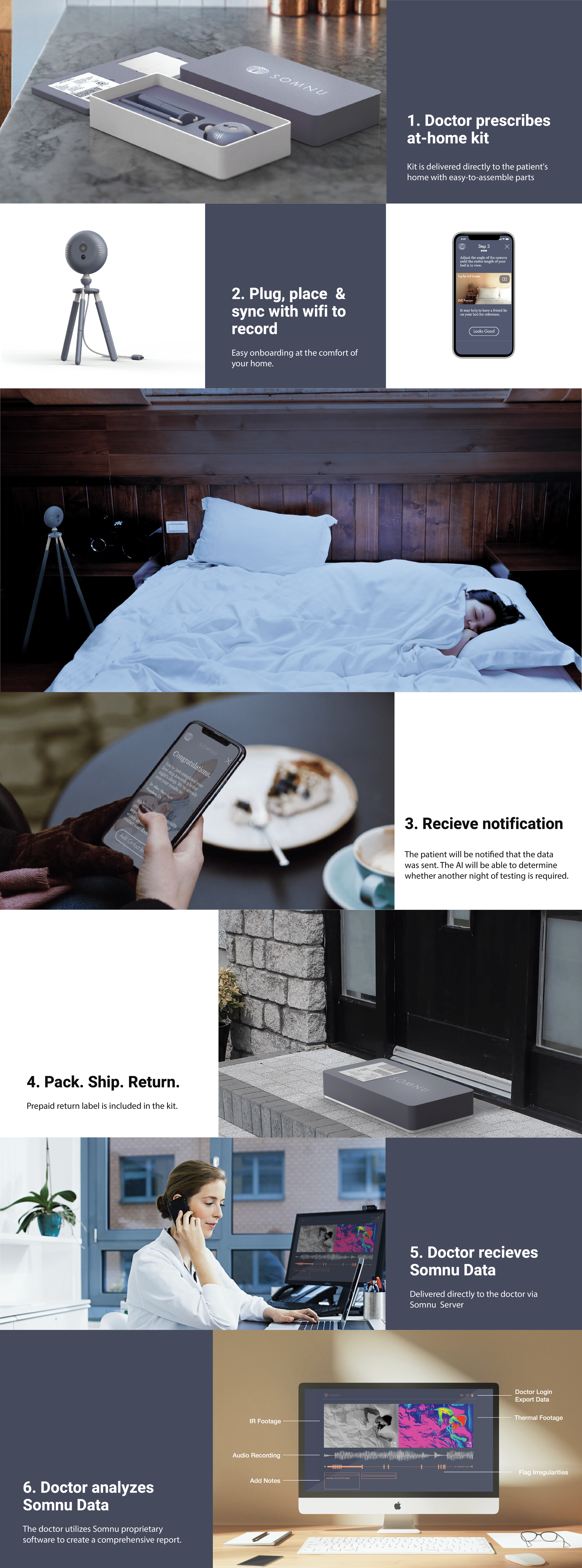
We approached Somnu as a service ecosystem, not just a device or an app. The goal was to simplify the complex and fragmented process of sleep testing into a seamless, patient-centered journey while ensuring doctors received accurate, actionable data.
01
Prescription & Delivery of At-Home Kit
Doctors prescribe the at-home kit, shipped directly to patients with easy-to-assemble parts. This eliminated hospital scheduling bottlenecks and improved patient accessibility.
02
At-Home Setup & Recording
Patients simply plug in the device, sync with WiFi, and record their sleep at home. Guided onboarding reduced friction and increased compliance.
03
Notifications & Data Transfer
Patients receive confirmation when their data is securely uploaded. AI determines if further nights of testing are needed, reducing unnecessary steps.
04
Return Logistics
Kits include prepaid return labels, streamlining the process for patients and minimizing delays.
05
Doctor Data Access
Doctors access synchronized IR, thermal, and audio data directly via the Somnu server. This ensures fast turnaround without manual handoffs.
06
Analysis & Reporting
Proprietary Somnu software supports doctors in reviewing data, adding notes, and flagging irregularities. This workflow improved accuracy and gave doctors better confidence in diagnosis.
05
Designing the Onboarding Experience
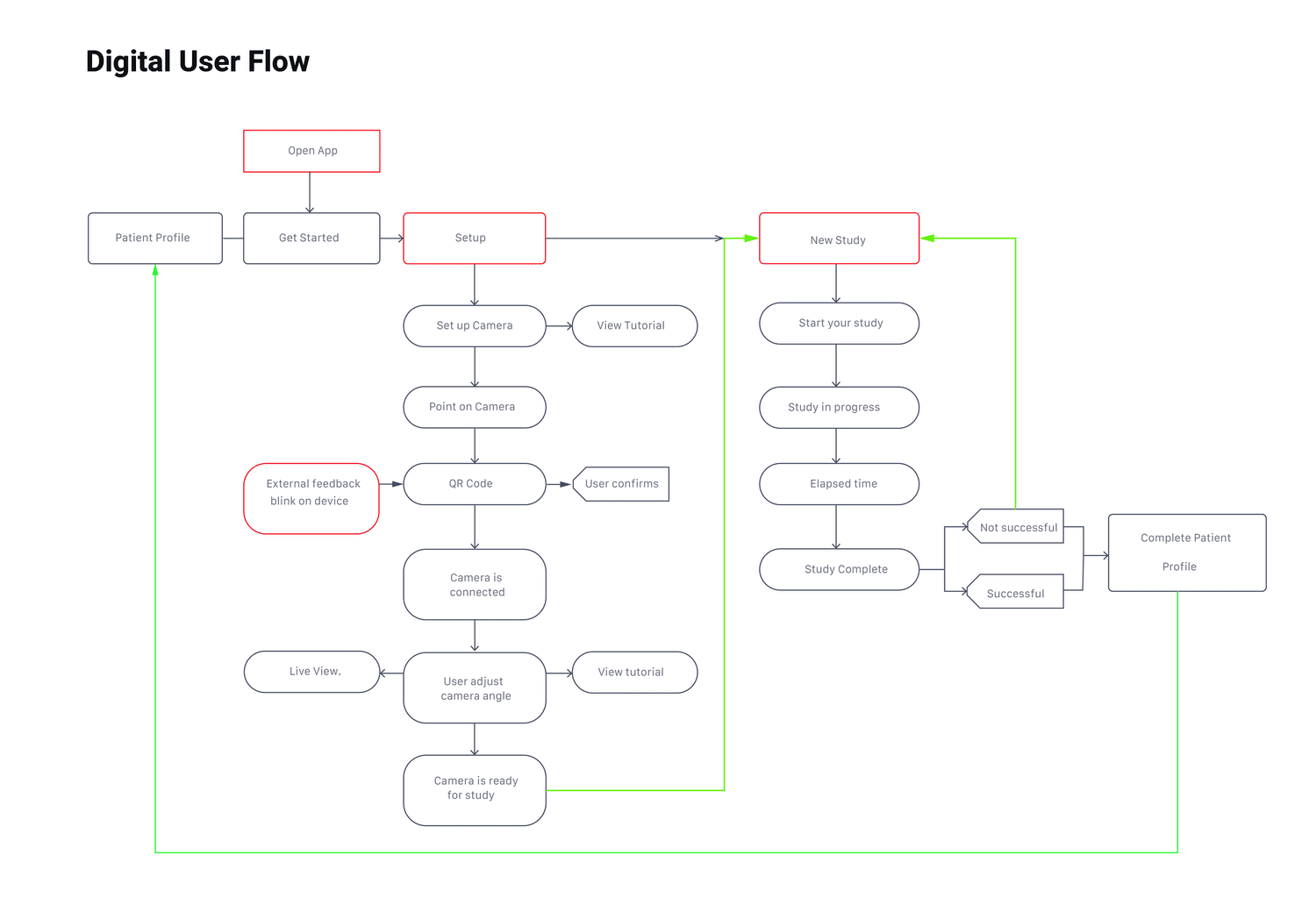
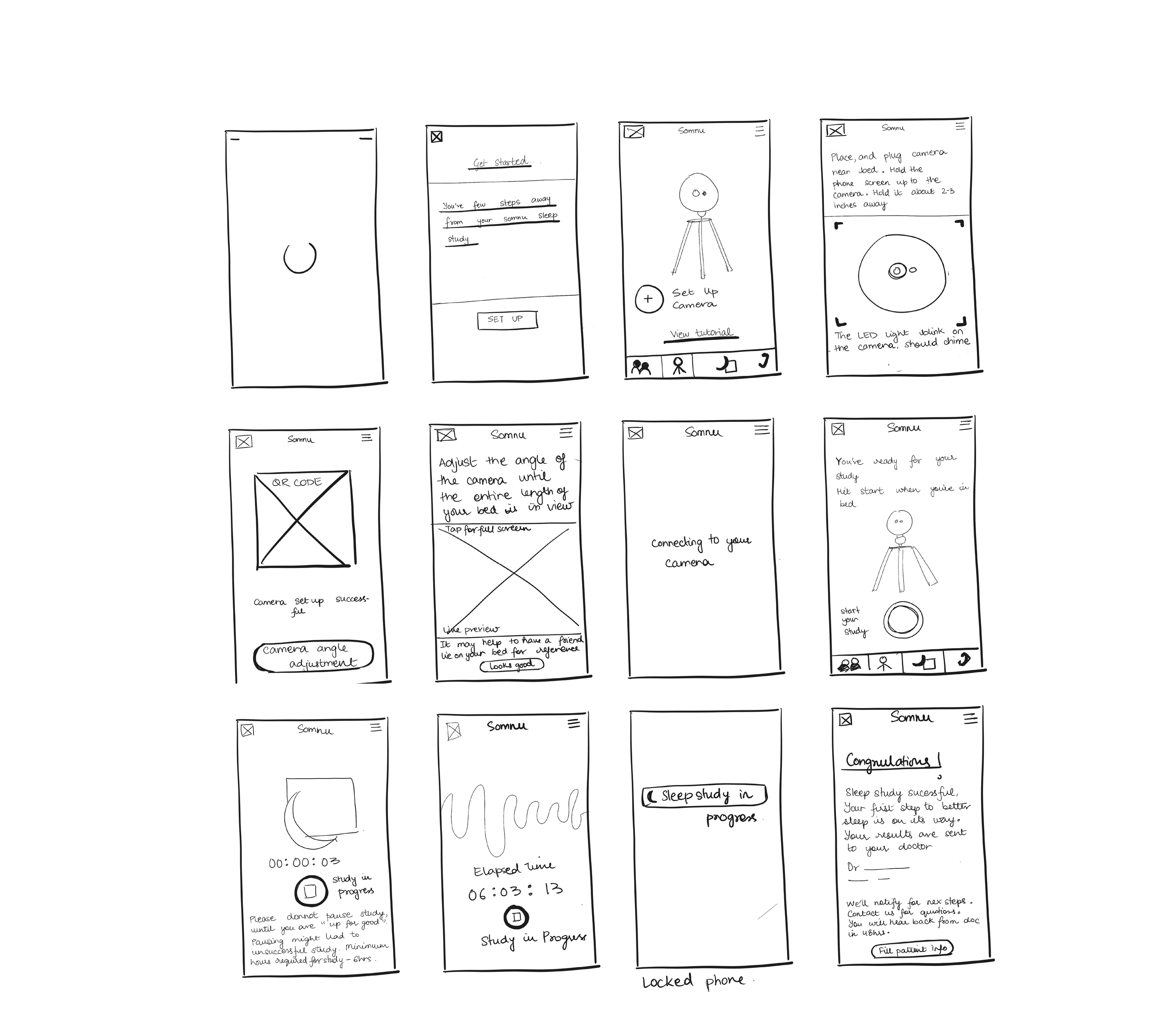
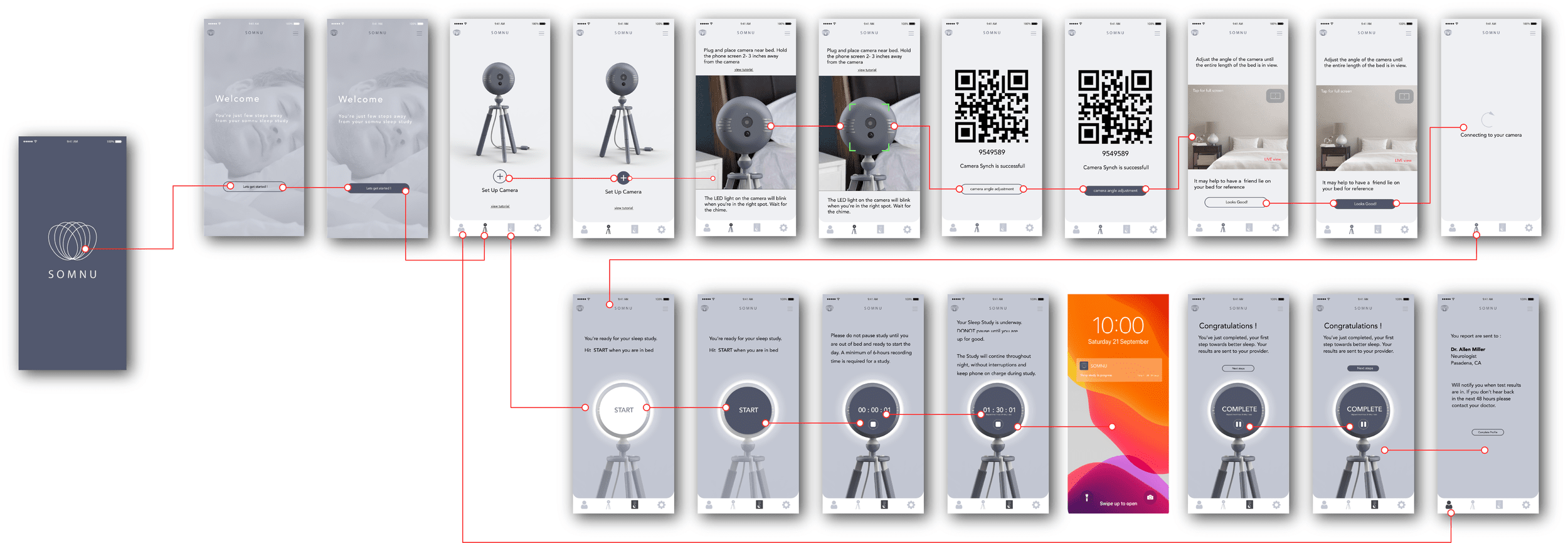
The digital user flow includes steps for opening the app, profile setup, camera setup, scanning QR codes, starting the study, progressing through the study, and completing the patient profile.
By looking at the entire ecosystem - from patients and doctors to insurers and logistics - I learned how to design for trust and business sustainability in healthcare.
02
Every touchpoint matters
The most meaningful solutions require understanding not just individual user interactions, but the entire system those users operate within. Every stakeholder's needs must be balanced to create a truly successful service.
Next Project
Plaid Integration
Automating bank reconciliation for trust accounting